Key Takeaways
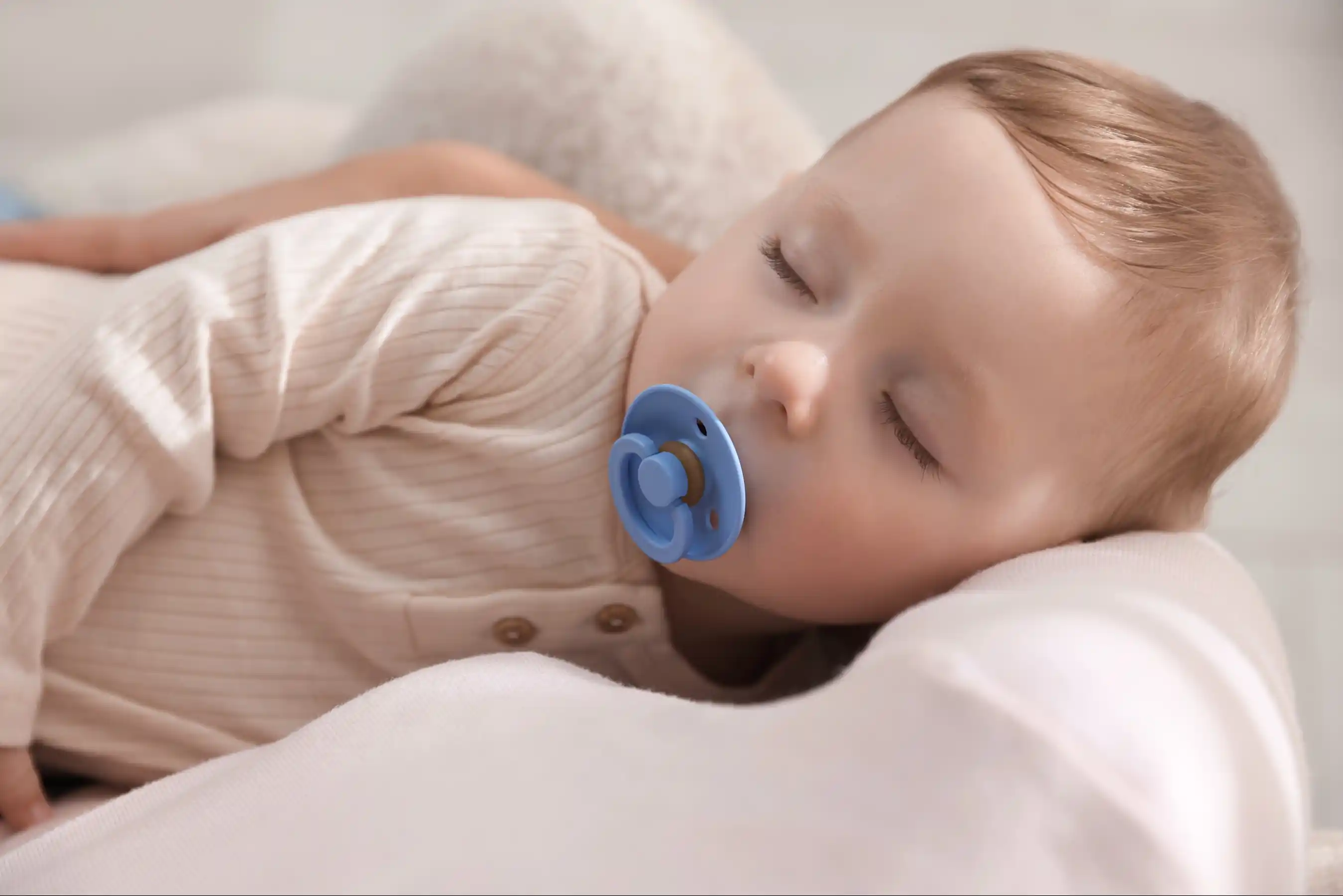
- Sudden Infant Death Syndrome, or SIDS, is the sudden, unexplained death of a baby younger than 1, and following safe sleep guidelines is the most effective way parents can help lower the risk.
- The American Academy of Pediatrics (AAP) recommends babies sleep alone, on their back, on a firm flat surface for every sleep, with nothing else in the sleep space.
- Room-sharing without bed-sharing for at least the first six months is one of the most protective steps parents can take.
- Common safe sleep myths, like assuming a baby who can roll over no longer needs to start on their back, can put babies at unnecessary risk.
- Capital Area Pediatrics is here to answer questions about your baby's sleep setup at any newborn or well-child visit, and our free Baby Care Basics class covers sleep safety in detail.
What Is SIDS, and Why Does Safe Sleep Matter?
Every October, Safe Sleep and SIDS Awareness Month puts a spotlight on one of the most important things new parents can do to protect their baby: creating a safe sleep environment. Sudden Infant Death Syndrome (SIDS) is the sudden, unexplained death of an infant younger than 1, usually occurring during sleep, that remains unexplained even after a full investigation.
Most sleep-related infant deaths happen in the first six months of life. According to the AAP's parent's guide to safe sleep, there is no guaranteed way to prevent SIDS, but a consistent safe sleep environment measurably lowers the risk. That is the entire reason safe sleep guidelines exist: not as an inconvenience, but as one of the few protective steps that is fully within a family's control.
The AAP's Current Safe Sleep Recommendations
The AAP updated its official safe sleep policy in 2022, based on a review of the latest infant sleep research. According to the AAP's safe sleep policy statement, the core recommendations are:
- Place your baby on their back for every sleep, including naps, until their first birthday.
- Use a firm, flat sleep surface that meets current Consumer Product Safety Commission (CPSC) standards, such as a crib, bassinet, or play yard.
- Keep soft objects, loose bedding, pillows, and crib bumpers out of the sleep space.
- Room-share, keeping your baby's sleep space in your bedroom, but not in your bed, for at least the first six months.
- Avoid smoke exposure during pregnancy and after birth, and avoid overheating your baby during sleep.
- Consider offering a pacifier at sleep time once breastfeeding is well established.
Both the American Academy of Pediatrics and Capital Area Pediatrics consistently recommend this same approach, so families can feel confident following AAP guidance at home and hearing the same advice at every visit.
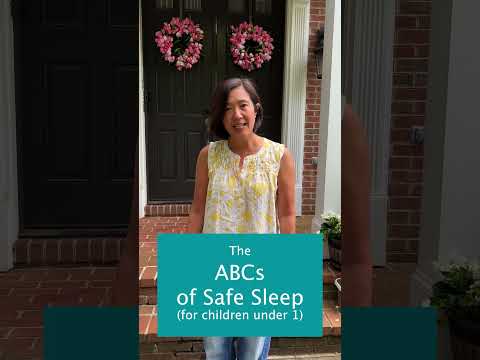
Check out Dr. Hanita Oh-Tan’s video on safe sleep!
Setting Up a Crib or Bassinet Correctly
A safe sleep space is simple by design. Here's how to set one up:
- Choose a crib, bassinet, or play yard that meets current CPSC safety standards.
- Use only a firm mattress designed for that specific product, covered with a tight-fitting sheet.
- Leave the space bare: no pillows, blankets, bumper pads, positioners, or stuffed animals.
- If you want your baby to feel warm, use a wearable blanket or sleep sack instead of loose bedding.
- Place the crib or bassinet in your own bedroom, close to your bed, for at least the first six months.
- Keep the room at a comfortable temperature for a lightly dressed adult, since overheating is a risk factor for SIDS.
Our free Baby Care Basics class walks new parents through sleep setup and safety in more depth alongside feeding, bathing, and soothing.
Common Safe Sleep Myths Parents Should Know About
Some outdated advice still circulates among family and friends. Here's what the current evidence actually supports.
| Myth | What the AAP Actually Recommends |
|---|---|
| A blanket helps a baby stay warm and cozy at night | Loose blankets raise the risk of suffocation; a wearable blanket or sleep sack is the safer choice |
| Once a baby can roll over, back-sleeping doesn't matter anymore | The AAP still recommends starting every sleep on the back, even after a baby can roll independently in both directions |
| A nap in a car seat, swing, or on the couch is fine if someone is nearby | These surfaces are not firm and flat, which raises the risk of suffocation during unsupervised sleep |
| Products marketed to reduce SIDS risk make bed-sharing or soft bedding safer | No monitor, wedge, or positioner has been shown to reduce SIDS risk; the basic safe sleep steps still apply |
When to Talk to Your Pediatrician About Sleep Concerns
Whatever your specific question, whether it's about your crib setup, a family history that puts your baby at higher risk, unusual breathing sounds during sleep, or simply wanting reassurance that you're doing this right, it is always worth bringing up at a well-child visit. Capital Area Pediatrics can also walk through your baby's individual well visit guidelines with you so you know what's covered at each stage.
Give Your Baby the Safest Start to Every Nap and Night
Safe sleep guidelines exist because they work: following them consistently is one of the most protective things a family can do. A bare, firm sleep space, back-sleeping every time, and room-sharing without bed-sharing cover the fundamentals.
If you have questions about your baby's sleep setup, schedule a visit with Capital Area Pediatrics today. Our team is glad to walk through your specific sleep space and answer any questions you have.
Frequently Asked Questions
What is SIDS and why does safe sleep matter?
SIDS is the sudden, unexplained death of a baby younger than 1, usually during sleep. There's no guaranteed way to prevent it, but following AAP safe sleep guidelines significantly lowers the risk.
What are the current safe sleep guidelines for newborns?
Babies should sleep on their back, alone, on a firm flat surface, in the same room as their parents but not the same bed, for every sleep during at least the first six months.
How can I reduce the risk of SIDS?
Follow safe sleep basics every time: back to sleep, a bare and firm sleep space, room-sharing without bed-sharing, avoiding smoke exposure, and not letting your baby overheat during sleep.
Is it safe to use a blanket, bumper, or crib positioner?
No. Loose blankets, bumpers, pillows, and positioners all increase suffocation risk and are not recommended for a baby's sleep space, regardless of how they're marketed.
Where can I get newborn safe sleep guidance near me in Northern Virginia?
Capital Area Pediatrics sees newborns at locations across Ashburn, Falls Church, Herndon, Oakton/Vienna, and Sleepy Hollow. Find a Capital Area Pediatrics location near you or call (703) 359-5100 to schedule.
